

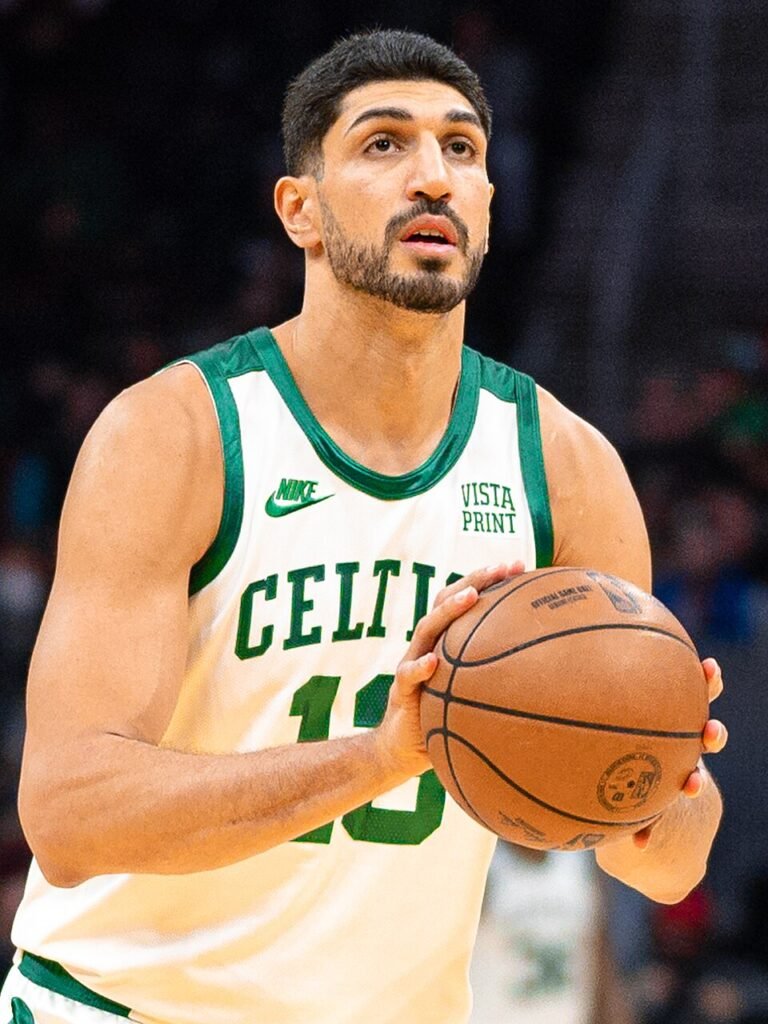
In an unexpected double maneuver that has thrust professional basketball into the heart of an ongoing national debate, former NBA players Enes Kanter Freedom and Royce White have publicly announced their intentions to declare for the 2027 WNBA Draft. Framed by both former athletes as a direct challenge to the league’s policies on gender identity and eligibility, the back-to-back announcements have intensified discussions surrounding transgender participation in women’s sports.
While the declarations function primarily as political provocations rather than official athletic transitions, they have forced the WNBA, its players, and its union to confront complex questions regarding eligibility, self-identification, and the boundaries of women’s athletics.
The Declarations: Freedom and White Challenge League Eligibility
The wave of declarations began on Friday, August 7, 2026, when former New York Knicks center Enes Kanter Freedom took to X (formerly Twitter) to announce that he was “officially declaring myself a WNBA prospect.” Freedom, a 6-foot-10 veteran of 11 NBA seasons, argued that under modern frameworks prioritizing self-identification, he satisfies all the criteria necessary to join the league.
“After careful consideration and reviewing the current eligibility guidelines, I’m officially declaring myself a @WNBA prospect,” Freedom wrote. “If simply declaring who you are is all that’s required, then I meet every single requirement necessary to compete in the WNBA.”
Hours later, Royce White—a former first-round NBA draft pick by the Houston Rockets and a Republican U.S. Senate candidate in Minnesota—followed suit. Speaking to Fox News Digital and OutKick, White stated that he also planned to declare for the 2027 draft, asserting that he “sometimes identifies” as a woman for the purpose of playing professional basketball.
White, who measured 6-foot-8 and over 260 pounds during his playing career, boasted that current WNBA players would have “nightmares” trying to guard him. He specifically targeted his home state team, the Minnesota Lynx, expressing a desire to play under head coach Cheryl Reeve and indicating that he would use the women’s locker room if rostered. White further stated that if the WNBA does not allow him to play or if he goes undrafted, he intends to pursue legal action.
“I think the WNBA could come out and make a definitive statement about guys with a pair of balls playing in the Women’s Association,” White told OutKick, adding that he planned to exploit current policies for “economic and athletic benefit.”
The Cultural Backdrop: A WNBA Divided on Trans Inclusion
The statements by Freedom and White did not occur in isolation. They come during a summer of intense internal and external discourse surrounding transgender athletes in women’s basketball, sparked largely by comments from Indiana Fever guard Sophie Cunningham.
In July, Cunningham publicly stated her belief that biological males should not compete in women’s sports, describing her stance as “common sense” while maintaining that she harbored no ill will toward transgender individuals. Her comments drew praise from conservative advocacy groups, but also highlighted sharp disagreements within the league.
Former teammate Brianna Turner, a forward for the Las Vegas Aces, publicly countered Cunningham’s stance, arguing that fearmongering surrounding transgender athletes distracts from more pressing issues facing women’s sports. Turner highlighted the legacy of Layshia Clarendon—the WNBA’s first openly transgender and nonbinary player, who played 12 seasons before retiring in 2024 without issue. Meanwhile, Minnesota Lynx head coach Cheryl Reeve made headlines by wearing a “Trans Kids Belong” shirt prior to a game against Indiana, demonstrating visible support for transgender inclusion.
Other high-profile figures have taken a more neutral stance. Indiana Fever superstar Caitlin Clark declined to weigh in on the cultural debate, telling reporters that eligibility decisions should remain in the hands of governing bodies while athletes focus strictly on basketball.
Policy vs. Rhetoric: What the WNBA Rules and Union Say
Despite the loud public declarations from Freedom and White, neither athlete has officially entered the WNBA Draft pool, nor does a public statement guarantee eligibility or selection.
Under Article XIII of the WNBA’s 2026 Collective Bargaining Agreement (CBA), the league explicitly states that “only players who are women are eligible to play in the WNBA.” However, the 409-page document does not explicitly define the term “woman,” nor does it detail specific medical, hormone, or self-identification criteria for transgender applicants. At the same time, standard draft eligibility rules require prospective players to meet strict age, education, and collegiate benchmarks.
Responding to the rising controversy, the Women’s National Basketball Players Association (WNBPA) released a statement affirming its commitment to diversity while condemning the use of female athletes as political instruments.
“We embrace justice, equity, diversity, and inclusion,” the union declared. “Hate, abuse, and demonization of any person or group of people, including transgender people, only fuel fear, division, and harm. We will continue to have hard conversations. But we will not be used as political pawns.”
Conclusion: Women’s Basketball at a Cultural Crossroads
As Enes Kanter Freedom and Royce White continue to leverage their public profiles, their declarations underscore a defining tension in modern sports administration. By testing the boundaries of league language through high-profile announcements and legal threats, they have ensured that the intersection of gender identity, Title IX, and athletic fairness remains a central point of debate for the WNBA moving forward.