
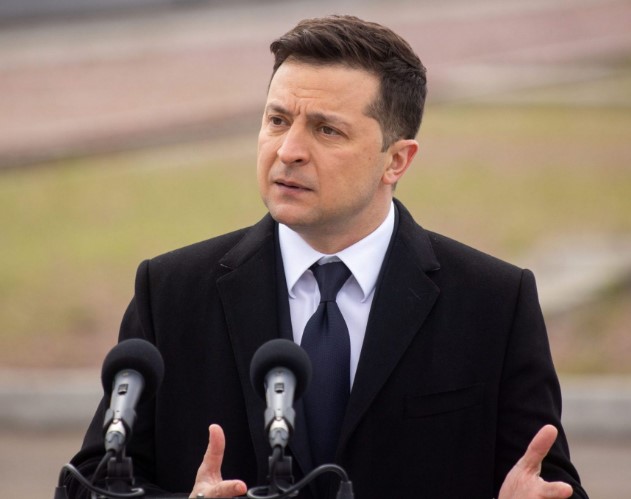
Ukrainian President Volodymyr Zelenskyy has expressed his willingness to step down if it would secure Ukraine’s membership in NATO. Speaking at a press conference on the third anniversary of Russia’s invasion, he stated, “If it ensures peace for Ukraine and my resignation is the condition, I am ready to do so. I would exchange my position for NATO membership immediately.”
However, Ukraine’s chances of joining NATO remain uncertain, especially as U.S. President Donald Trump has taken a firm stance against continued American support for Ukraine’s defense. Trump’s administration has made moves to negotiate an end to the war without involving Ukraine or its European allies. Following a conversation between Trump and Russian President Vladimir Putin, U.S. representatives engaged in talks with Russian officials in Saudi Arabia, excluding Ukraine from the discussions.
Zelenskyy also criticized a proposed agreement from the Trump administration, which would grant the U.S. control over Ukraine’s mineral resources in exchange for continued military assistance. He strongly opposed the condition that Ukraine would have to repay the aid received for its defense, stating he would never accept such terms. Trump has claimed the U.S. has provided $500 billion in aid to Ukraine, but Zelenskyy countered that the actual amount is significantly lower—less than one-fifth of that figure. The only scenario in which the deal would make sense, he argued, would be if the U.S. deployed its own troops to Ukraine to ensure security. Even former President Joe Biden, who actively supported Ukraine, refused to send American forces directly into the conflict.
Despite Zelenskyy’s strong objections, Trump’s representatives remain confident that the deal will be finalized soon. Steve Witkoff, Trump’s special envoy, stated on CNN’s State of the Union, “The president has made his stance clear. Zelenskyy is no longer hesitating. I expect the deal to be signed this week.”
Witkoff further claimed that the war was “provoked,” though he did not explicitly blame Russia. He suggested that discussions about Ukraine’s NATO membership before the invasion had created a security concern for Russia, implying that the situation could have been avoided.
The relationship between Trump and Zelenskyy has become increasingly strained, with Trump recently labeling Zelenskyy a “dictator” and pressuring Ukraine to hold elections, which have been postponed due to the ongoing war. When asked whether he viewed Putin in the same light, Trump evaded the question, further deepening tensions between the two leaders.