
For the past few years, the internet landscape for American youth was governed by a single, powerful word: Delulu. Short for “delusional,” the phrase became the ultimate battle cry for Gen Z. It birthed a cultural movement where “manifesting your dream life” meant pretending your harsh reality didn’t exist. Social media was flooded with hyper-polished “That Girl” morning routines, perfectly curated $10 aesthetic iced lattes, and heavily filtered videos showcasing romanticized versions of everyday life. The philosophy was simple: if you act like you are living a glamorous life, eventually, you will be.
But as we move through 2026, a massive cultural shift is happening across the United States. The era of strategic delusion is officially facing a reckoning.
American Gen Z is experiencing collective burnout from the exhausting demands of toxic positivity and artificial perfection. In its place, a new movement has taken over: “Reali-Tea.” From TikTok feeds to daily lifestyle choices, young Americans are actively ditching curated glamour in favor of raw, unedited, and unfiltered authenticity.
The Death of the “Aesthetic” Lifestyle
The cracks in the glamorous facade began showing when inflation and economic pressures made the highly romanticized internet lifestyle completely unattainable for the average young adult. Maintaining an aesthetic life is expensive. Gen Z quickly realized that buying $15 organic green juices and spending hundreds on trendy skincare just to film a 15-second clip wasn’t sustainable—or real.
The reaction has been a swift turn toward what trend forecasters call “De-influencing” and “Casual Posting.” On platforms like Instagram and TikTok, the obsession with perfect grid layouts and curated color palettes has plummeted. Instead, American youth are embracing messy rooms, unedited photo dumps, and videos filmed in bad lighting without a shred of makeup. The goal is no longer to make peers jealous of a fake luxury lifestyle; the goal is to make them feel less alone in the messy reality of being a young adult today.
The Rise of “Reali-Tea” and Raw Vulnerability
This shift is deeply embedded in how Gen Z communicates online. Instead of performing for the camera, content creators are turning toward “raw venting” sessions. Topics that were once considered taboo or embarrassing—like financial anxiety, job hunting struggles, loneliness, and mental health setbacks—are now the highest-performing content buckets online.
Young Americans are seeking out “Reali-Tea”—honest, behind-the-scenes truths about what life actually looks like. A creator showing their bank account balance after paying rent or crying about a failed job interview receives far more engagement and genuine respect than someone showing off a newly purchased designer bag. Authenticity has become the ultimate form of social currency. If you aren’t being real, you are simply viewed as untrustworthy.
Ditching Fast Fashion for DIY and Second-Hand Aesthetics
This cultural pivot is heavily impacting the American consumer landscape. For years, fast-fashion empires thrived on Gen Z’s desire to constantly look glamorous in new outfits. Today, wearing mass-produced, ultra-cheap clothing just for a digital aesthetic is increasingly stigmatized.
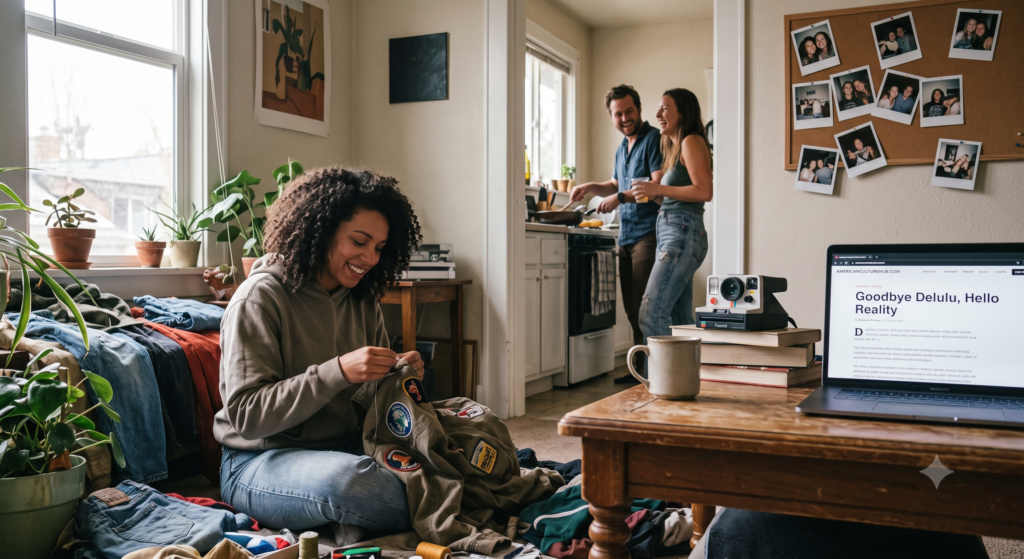
Instead, American youth are turning toward thrift culture, clothing swaps, and DIY projects. Upcycling old clothes, sewing their own garments, and proudly wearing scuffed, well-loved vintage items have become the new status symbols. The aesthetic is no longer “I bought this expensive outfit to look perfect”; it is “I found this unique piece in a thrift store, and it tells a story.”
Similarly, the obsession with expensive cafe visits is being replaced by a proud DIY culture. Gen Z is making their own matcha lattes at home, baking sourdough bread from scratch, and embracing slow, domestic hobbies that focus on the experience rather than the final, photographable product.
Why This Move to Reality Matters
Ultimately, the transition from Delulu to Reality is a healthy evolution for a generation that grew up entirely online. Living in a state of forced delusion was a coping mechanism for a turbulent world, but it ultimately led to deep feelings of inadequacy and disconnection.
By reclaiming raw authenticity, American Gen Z is building a more empathetic, grounded digital subculture. They are proving that there is immense beauty, humor, and connection to be found in the ordinary, unpolished moments of daily life. The glamour era was fun while it lasted, but reality has finally taken center stage.