
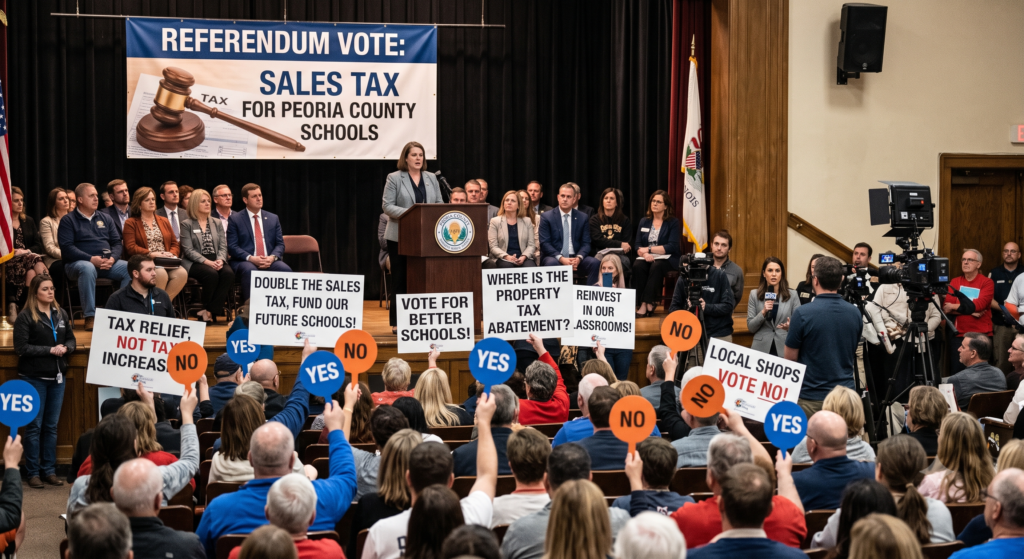
Peoria County is standing at a critical financial and educational crossroads. Local officials and school board representatives are preparing for a pivotal vote that could fundamentally reshape how public education is funded across the region. The upcoming decision focuses on whether to place a major referendum on the ballot that would effectively double the county’s school facility sales tax.
The proposal aims to generate millions in new revenue to address aging school infrastructure, bolster classroom technology, and enhance campus security. However, with rising inflation and economic uncertainty weighing heavily on local families, the measure is drawing fierce debate from taxpayers, business owners, and education advocates alike.
The Push for Upgrades: Why School Leaders Say It’s Needed
For years, school districts within Peoria County have grappled with the compounding challenges of deferred maintenance and outdated facilities. From leaky roofs and failing HVAC units to the urgent need for modernized science labs and secure entryways, the list of capital improvement demands has grown rapidly. Under current funding models—which rely heavily on local property taxes and fluctuating state allocations—districts have struggled to keep pace with these expensive structural needs.
Proponents of the referendum argue that doubling the dedicated sales tax is the most equitable and efficient way to bridge the funding gap. By utilizing a sales tax model rather than an outright increase in property taxes, the financial responsibility is distributed across a wider base. Advocates emphasize that this model ensures that out-of-town visitors, commuters, and tourists who shop or dine within Peoria County contribute to the upkeep of the local educational system.
The funds generated by the increase would be legally restricted to capital projects, debt service, school resource officers, and mental health professionals. By shifting the burden of building maintenance to sales tax revenue, school boards could potentially lower or stabilize property tax levies, providing direct relief to local homeowners.
The Consumer Strain: The Counterargument Against Higher Taxes
Despite the clear structural needs of local classrooms, the proposal faces steep pushback. Opponents argue that doubling the sales tax places an unfair burden on everyday consumers at a time when the cost of living remains stubbornly high. Critics contend that even fractional increases on retail transactions add up over time, disproportionately impacting lower-income families who spend a higher percentage of their earnings on taxed everyday goods.
Local business advocates have also voiced strong reservations. Some retail and hospitality owners express concern that higher sales tax rates could drive consumers to neighboring counties with lower tax burdens. They argue that Peoria County risks losing its competitive edge as a regional retail hub, which could inadvertently hurt the very businesses that drive the local economy.
Furthermore, some taxpayer watchdogs remain skeptical about the promise of property tax relief. They point out that while sales tax revenue can be used to abate property taxes, there is rarely a permanent guarantee that property owners will see a significant, long-term reduction on their annual bills if overall district expenses continue to climb.
Balancing the Scales: What Happens Next?
The impending vote by local officials will determine whether this polarizing issue goes before the public for a final decision. If approved for the ballot, the referendum will launch a high-stakes public campaign as both sides work to sway voters. School districts plan to roll out comprehensive informational campaigns, detailing exactly how much revenue would be generated and listing the specific projects slated for funding in each community.
Ultimately, Peoria County residents will have to weigh two competing, yet deeply valid, priorities: the urgent need to invest in the safety and future of local children versus the pressing necessity of maintaining household financial stability.
Whether the referendum passes or fails, the debate itself highlights a systemic challenge facing public education across the state: finding a sustainable, fair mechanism to fund public schools without placing an exhausting financial burden on the community members who support them.