
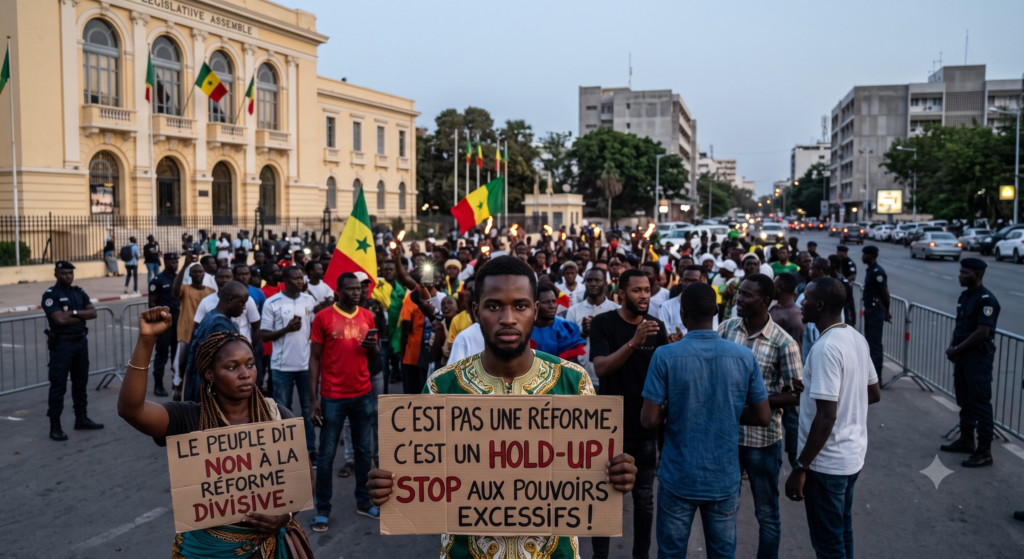
Senegal’s reputation as one of West Africa’s most stable democracies faces a fresh test after the National Assembly adopted a highly controversial constitutional amendment. The reform significantly reshapes the country’s institutional balance by reducing the long-standing executive authority of the president and transferring broader oversight and legislative influence to parliament. While proponents view the bill as a long-awaited cure for a hyper-presidential system, opposition parties and civil society groups have slammed it as a politically motivated power grab, sparking protests and clashes outside the legislature in Dakar.
A Systemic Shift or Political Revenge?
The legislative overhaul comes amid a deepening political rift at the very top of the state. Just a month prior, President Bassirou Diomaye Faye dismissed his prime minister, Ousmane Sonko—the fiery and influential leader of the ruling African Patriots of Senegal for Work, Ethics and Fraternity (PASTEF) party. Following his dismissal, Sonko quickly pivoted back to the legislative branch, where he was elected as the president of the National Assembly.
Because Sonko’s party maintains a significant parliamentary majority, the opposition has accused him of orchestrating the constitutional changes as a weapon of political retribution against President Faye. The reform directly tackles the coexistence of a strong presidency and parliamentary mechanisms, a dynamic that has caused structural tension in Senegalese politics since the early 1960s.
The Core Reforms: Clipping the Wings of the Executive
The approved constitutional amendment introduces several major structural changes aimed at dispersing power away from the presidential palace:
- Depoliticizing the Presidency: The reform mandates a strict separation between state functions and partisan politics. Under the new rules, the president is barred from simultaneously serving as the leader of a political party or coalition.
- Enhanced Legislative Oversight: The National Assembly has secured much wider powers, including the authority to form independent investigative committees and summon individuals for questioning. Crucially, the government must now formally inform the legislature regarding all agreements linked to the exploitation of Senegal’s natural resources.
- Transition Constraints: To prevent outgoing administrations from rushing through sensitive executive decrees, the amendment strictly limits the decisions the executive branch can make during the limbo period between a presidential election and the official certification of the results.
- Stricter Dissolution Controls: The reform places tight constitutional limits on the president’s ability to unilaterally dissolve parliament, shielding the legislature from executive overreach.
- A New Judicial Watchdog: The text proposes replacing the current Constitutional Council with a newly expanded “Constitutional Court.” The number of judges will rise from seven to nine, with three of those positions chosen from a pool proposed by the President of the National Assembly.
Clashes and Tear Gas in Dakar
The legislative session on June 29, 2026, was marked by intense friction both inside and outside the parliamentary walls. Responding to calls from various opposition factions and civil society watchdogs, demonstrators converged on the parliament building in Dakar, brandishing placards reading “Hands off my Constitution!”
Protesters expressed deep concern that changing the foundational laws of the state to resolve a personal rift between Faye and Sonko sets a dangerous precedent for the rule of law. Senegalese police deployed tear gas to disperse the crowds and detained several prominent opposition leaders and activists during the unrest.
The Road Ahead: The Ultimate Verdict
Despite passing the National Assembly, these sweeping reforms are not yet fully set in stone. Recognizing the deeply divisive nature of the text, the government has announced that the constitutional overhaul will ultimately be put to a nationwide public referendum.
No official date has been set for the vote, but the upcoming referendum promises to be a definitive moment for Senegal. As the country prepares for a national debate, citizens will have to decide whether this reform represents a genuine step forward for democratic checks and balances, or a fragile system being rewritten to serve the political battles of the day.