
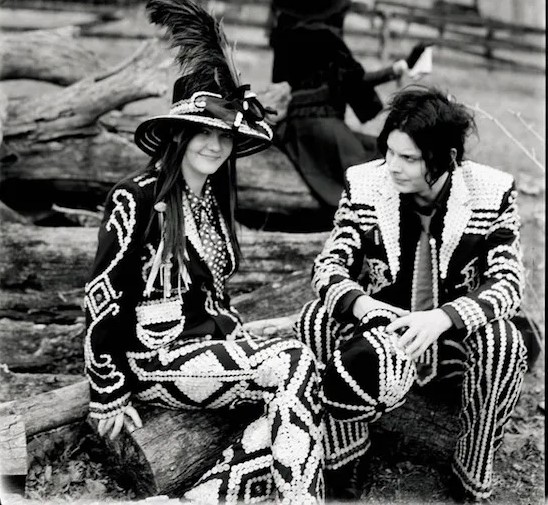
The sonic landscape of modern rock music is littered with high-tech production, digital correction, and massive wall-of-sound arrangements. Yet, more than two decades after its release, one of the most influential touchstones of the genre remains an album born out of strict limitation, vintage gear, and just two people in a room. Released on April 1, 2003, Elephant—the seminal fourth studio album by Detroit duo The White Stripes—did the seemingly impossible: it turned stripped-back garage rock minimalism into a global phenomenon. Though the band officially dissolved in 2011 and has remained inactive for well over a decade, their footprint on stadium culture, guitar music, and the broader pop culture lexicon remains entirely unmatched.
The Genesis of Elephant and the Analog Philosophy
Before Elephant, Jack and Meg White were already critical darlings of the indie rock underground, known for their strict aesthetic constraints (a rigid red, white, and black color palette) and an equally disciplined musical setup. The band operated solely on a guitar-and-drums framework. Jack handled the searing vocals and inventive guitar work, while Meg provided the primal, metronomic heartbeat on the drums. Their songwriting drew deeply from a well of American roots music, fusing the raw emotion of Delta blues, the aggression of early punk, the grandiosity of classic rock, and the storytelling of early country.
When it came time to record Elephant, rather than embracing the digital recording boom of the early 2000s, the duo doubled down on their antiquarian philosophy. They traveled to London’s legendary Toe Rag Studios, an environment famous for its exclusive use of vintage analog equipment. Tracking the album required a reliance on live takes, tape machines, and old-school mixing desks, intentionally avoiding the safety nets of modern studio editing. This commitment to raw performance captured an explosive, unpolished energy that immediately set the record apart from the glossy, over-produced rock of the era. Distributed via V2 and Third Man Records, Elephant was a fierce declaration that rock and roll didn’t need to be complicated to be monumental.
Chart Conquests and Critical Coronation
The mainstream music industry quickly took notice. In the United States, Elephant shattered expectations by climbing all the way to No. 6 on the Billboard 200 chart. This achievement marked the band’s very first appearance in the domestic Top 10, instantly elevating their profile from indie icons to major mainstream heavyweights. The commercial momentum didn’t stop there; the record eventually crossed the threshold for Platinum certification by the Recording Industry Association of America (RIAA), representing over one million units in combined sales and digital streams across the country.
The critical peak of this era arrived at the 2004 Grammy Awards. The album’s leading single was recognized on the grandest artistic stage, taking home the trophy for Best Rock Song. This win served as an official industry confirmation that the duo’s uncompromising, DIY ethos could completely dominate mainstream radio without losing an ounce of its integrity.
The Song That Conquered the World
It is impossible to discuss the legacy of Elephant without examining its crowning jewel: “Seven Nation Army.” Anchored by a hypnotic, driving rhythm, the track is defined by an opening hook that has become one of the most recognizable riffs in music history. Ironically, because of its thick, rumbling tone, millions of casual listeners still mistake the sound for an electric bass guitar. In reality, the distinct sequence was created by Jack White running a semi-acoustic guitar through an octave pedal to drop the pitch.
What started as an alternative rock hit quickly mutated into a cross-cultural phenomenon. Over the years, “Seven Nation Army” transcended the boundaries of traditional music mediums to become the ultimate global sports anthem. Today, the song’s easily chanted, seven-note refrain is a permanent fixture in popular culture, echoing through the rafters of NFL, NBA, European soccer, and college stadiums worldwide. It serves as a universal battle cry for crowds of tens of thousands, proving that simplicity is often the ultimate form of sophistication. This cultural permanence is backed up by digital metrics, as the track has comfortably surpassed 1 billion streams on major musical platforms.
An Enduring Blueprint
Today, The White Stripes remain entirely inactive, with no plans for reunion tours or archival releases on the horizon. Jack White continues to build a sprawling musical legacy through his various solo projects, collaborations, and his record label, Third Man Records, while Meg White has stepped away from the public eye.
Nevertheless, Elephant continues to instruct and inspire. By proving that a guitar, a drum kit, and an uncompromising vision were enough to conquer the Billboard charts and change stadium culture forever, The White Stripes left behind an architectural blueprint for future generations of artists. They reminded the world that the true heart of rock and roll lies not in the sophistication of the technology, but in the raw power of the performance.