
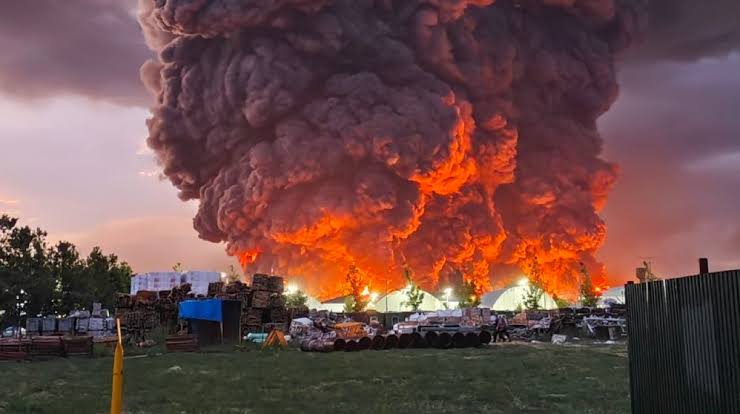
Ukraine has launched a series of long-range strikes against fulfillment centers belonging to Wildberries, Russia’s largest online retailer, marking a distinct shift in Kyiv’s strategy to disrupt Moscow’s war effort at its logistical source.
Strikes Hit Facilities in Krasnodar and Stavropol
The latest attacks targeted two major Wildberries logistics hubs in southern Russia: one in the Krasnodar region and another in Nevinnomyssk, located in the Stavropol region.
Wildberries co-founder and chief executive Tatyana Kim confirmed that both sites sustained damage. According to Krasnodar regional authorities, the strike on their local facility resulted in one casualty—a young woman—and left three other people hospitalized.
Kyiv’s Rationale: Cutting Off Dual-Use Military Supply Lines
Ukrainian President Volodymyr Zelenskyy defended the strikes, characterizing the e-commerce hubs as critical military-adjacent supply nodes rather than purely civilian infrastructure. Ukrainian intelligence maintains that commercial logistics networks, including Wildberries, are actively utilized to store and distribute drone components, tactical gear, and communications equipment destined for Russian forces on the front lines.
The targeted campaign reflects Ukraine’s intent to pressure Russia’s internal supply chains, mirroring Russia’s ongoing bombardment of Ukrainian energy grids and transit hubs.
Escalation Under New Military Leadership
The strikes coincide with significant changes within Ukraine’s top military brass. General Mykhailo Drapatyi, newly appointed as Ukraine’s top commander, signaled an aggressive expansion of deep-range operations behind Russian lines.
“The president of Ukraine has set clear objectives for us: to continue and intensify offensive operations in all domains, to plan new operations behind enemy lines, to develop our military and its technologies, and to build up the capabilities of the armed forces,” Drapatyi stated.
Drapatyi’s appointment comes during a period of political tension in Kyiv following executive leadership reshuffles, though his appointment has drawn widespread support across Ukrainian military and civil circles.
Economic Fallout and Retaliation
The strikes on civilian-facing e-commerce hubs have sent ripples through Russia’s business community. The Russian e-commerce association Aurek requested urgent government intervention, asking for a six-month tax payment deferral to mitigate losses for vendors and logistics operations affected by the facility destructions.
Meanwhile, Russian retaliatory strikes continued across Ukraine:
- Chernihiv Region: A Russian strike damaged local energy infrastructure, cutting off power to more than 100,000 consumers.
- Odesa & Chornomorsk: Russian forces targeted port infrastructure and maritime logistics centers, claiming the facilities were housing military equipment and drone assembly stores.
Diplomatic Movements & Shadow Fleet Interceptions
Beyond the physical battlefield, parallel pressure continues on diplomatic and economic fronts:
- Maritime Interceptions: European Union naval forces boarded the oil tanker MV South Star, suspected of flying a false flag to evade international sanctions. The move forms part of a broader crackdown on Russia’s “shadow fleet” exporting oil above Western price caps.
- Diplomatic Engagement: Zelenskyy held discussions with US envoys Steve Witkoff and Jared Kushner to discuss potential diplomatic frameworks, while also pressing US Ambassador to NATO Matthew Whitaker for accelerated licensing to manufacture Patriot air defense systems domestically in Ukraine.