

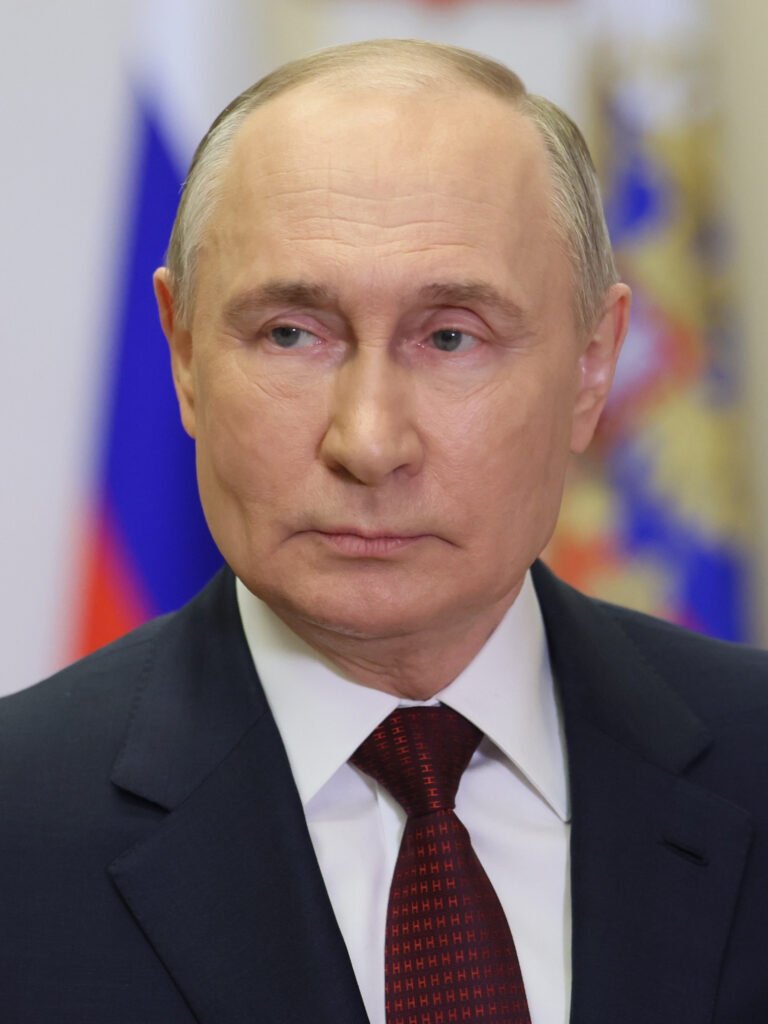
A series of newly declassified U.S. intelligence assessments reveals a stark shift in Washington’s outlook on Kremlin strategy: Russian President Vladimir Putin may attempt a direct, limited attack against a NATO member state in the coming years to test the Atlantic alliance’s collective defense guarantees.
According to intelligence reports published by The Wall Street Journal and corroborated by U.S. officials, the Kremlin could execute operations ranging from wide-scale cyberattacks and sabotage to a localized ground incursion between late 2026 and 2029. The assessment highlights growing concerns that as Russia’s war in Ukraine grinds on at immense human and material cost, an increasingly cornered Kremlin may view a calculated provocation against NATO as its best chance to fracture Western unity.
A Shift in Washington’s Strategic Assessment
For years, the prevailing consensus among Western intelligence agencies was that Moscow would scrupulously avoid any deliberate military clash with NATO while its armed forces were bogged down in Ukraine. U.S. intelligence previously calculated that Putin recognized the catastrophic risks of opening a second front against a far superior military alliance.
However, that consensus shifted dramatically earlier this year. Intelligence analysts concluded that changing dynamics on the battlefield and inside Russia have altered Moscow’s risk calculus. Despite massive Russian military investments, Kyiv’s forces have continued to inflict severe damage using long-range homegrown drones, targeting Russian military assets, logistics nodes, and critical oil infrastructure. Faced with minimal territorial gains along the Ukrainian front lines and escalating domestic pressure to demonstrate a decisive victory, Putin may now see a confrontation with NATO not as an existential danger, but as a strategic political lifeline.
Desperation and Strategy: Why Putin Might Probe the Alliance
Western intelligence officials emphasize that if Russia were to launch an attack against a NATO member, its primary goal would not be full-scale territorial conquest or a total military victory over the alliance. Instead, the strategy would be political and psychological: to shatter the credibility of NATO’s foundational pillar—Article 5.
By initiating a small-scale, localized land incursion or an aggressive hybrid attack, Putin would present NATO leadership with a agonizing dilemma. Alliance members would be forced to choose between executing a full military response that risks escalating into a wider nuclear-tinged conflict, or accepting a minor, localized loss to keep the peace. If NATO allies hesitate or fail to mount a unified, forceful response to a limited intrusion, the perception of NATO’s collective security guarantee would be fundamentally undermined. In Moscow’s view, exposing NATO’s internal divisions would effectively achieve Putin’s longstanding geopolitical objective: separating the United States from its European allies and proving that Western security promises are hollow.
The Threat Spectrum: From Cyber Warfare to Border Incursions
The intelligence assessments outline a multi-tiered spectrum of potential Russian aggression, with lower-level hybrid actions considered the most immediate threat. Over recent months, European nations have already witnessed a surge in mysterious incidents, including explosive-laden drones discovered near critical European infrastructure, missile incursions into allied airspace, and covert sabotage attempts targeting supply routes.
While a conventional ground incursion into a Baltic state or Poland remains rated as a lower-probability scenario initially, intelligence officials warn the risk rises significantly if fighting in Ukraine freezes or settles into a low-intensity stalemate. A frozen conflict could free up Russian troops, allowing Moscow to reallocate units and test NATO’s borders under the guise of border disputes, gray-zone military maneuvers, or localized security incursions.
Crucially, NATO’s Article 5 explicitly guarantees a collective response to armed attacks, but it contains ambiguity regarding “sub-Article 5” threats, such as state-sponsored cyber strikes, infrastructure sabotage, or covert hybrid warfare. Moscow has historically exploited these gray zones, knowing that Western allies often struggle to reach consensus on when hybrid aggression crosses the threshold into an act of war.
Stockpile Deficits and NATO’s Readiness Challenge
The alarming intelligence arrives at a difficult juncture for Western defense planners. Years of supplying Ukraine with heavy weaponry and ammunition, alongside recent U.S. military operations in the Middle East, have heavily depleted allied stockpiles of key precision-guided munitions.
Defense experts note that critical inventories—including long-range Army Tactical Missile Systems (ATACMS), advanced Precision Strike Missiles, and short-range Stinger surface-to-air interceptors—are facing significant strain. These exact weapon systems would form the backbone of NATO’s rapid-response forces in the event of a European land conflict. While defense manufacturers in the U.S. and Europe are ramping up production, replenishing these stocks to optimal levels will take years.
The Looming Test of Collective Defense
As Russian probing tactics become more brazen, military analysts and intelligence officials agree that passivity poses the greatest danger. Failing to establish clear, firm boundaries against low-level incursions and hybrid sabotage only invites bolder Kremlin risk-taking.
Whether through increased intelligence sharing, removing operational restrictions on Ukrainian defense strikes, or strengthening forward deployments along NATO’s eastern flank, Western leaders face an urgent imperative. To deter Moscow’s calculated gamble, NATO must demonstrate that its commitment to Article 5 remains ironclad, ensuring that any Russian attempt to test the alliance’s resolve is met with an immediate and decisive collective response.